Research Hub
What Is TB-500? The Complete Researcher's Guide to Thymosin Beta-4
A synthetic analog of Thymosin Beta-4 studied for actin regulation and cell motility. Learn about published research, molecular data, and purity standards.
For Research Use Only
Last Updated: March 2026
⚠️ RESEARCH USE ONLY. All information presented is based on published preclinical and in vitro research. TB-500 is sold strictly as a research compound. Not for human or animal consumption. Not evaluated by the FDA.
TB-500 is a synthetic analog of Thymosin Beta-4 (Tβ4), a 43-amino acid peptide naturally found in nearly all mammalian cells. With the molecular formula C₂₁₂H₃₅₀N₅₆O₇₈S and a molecular weight of approximately 4,963 g/mol, TB-500 is primarily studied for its actin-binding properties, cell motility mechanisms, and roles in tissue remodeling pathways in preclinical models.
Overview
TB-500 At a Glance
| Specification |
Detail |
| Full Name | Thymosin Beta-4 Fragment (Synthetic) |
| CAS Number | 77591-33-4 |
| Molecular Formula | C₂₁₂H₃₅₀N₅₆O₇₈S |
| Molecular Weight | ~4,963 g/mol |
| Amino Acid Count | 43 |
| Form | Lyophilized (freeze-dried) powder |
| Purity | ≥98% (Vanguard Laboratory verified) |
| Storage | -20°C long-term / 2-8°C short-term |
| Primary Research Areas | Actin regulation, cell migration, tissue remodeling |
| Related Compounds | BPC-157, Thymosin Alpha-1 |
Compound Profile
What Is TB-500 and Where Did It Come From?
Here's the short version. Thymosin Beta-4 was first isolated from the thymus gland back in the 1960s by Allan Goldstein and his research team. The thymus is a small organ behind your sternum that plays a significant role in immune function, especially early in life. Researchers were studying thymic hormones when they found something interesting: a small peptide that showed up practically everywhere in the body.
Not just the thymus. Not just immune cells. Everywhere.
Thymosin Beta-4 turned out to be one of the most abundant intracellular peptides in mammalian biology. It's present in blood platelets, wound fluid, and most nucleated cells. That's unusual for a peptide. Most have narrow, specific roles. Tβ4 seemed to be doing something more fundamental.
TB-500 is the synthetic version of this peptide, produced for laboratory research settings. Same amino acid sequence. Same molecular structure. The "TB-500" name became standard in research supply contexts to distinguish the synthetic compound from the endogenous (naturally produced) protein. So when you see TB-500 referenced in supplier catalogs and Thymosin Beta-4 in published literature, they're referring to the same molecule.
Why does this matter for researchers? Because understanding a compound's origin tells you where to look in the published literature. Search for "Thymosin Beta-4" in PubMed and you'll find thousands of papers spanning decades. Search for "TB-500" and you'll find far fewer, mostly from the last 10-15 years. Same compound. Different naming conventions depending on context.
All WhyNot Labs TB-500 is independently tested by Vanguard Laboratory with Certificates of Analysis published for every batch. View our COA Library →
The information above reflects published scientific literature on TB-500 in preclinical and in vitro settings. For research use only.
Mechanism of Action
How TB-500 Works at the Molecular Level
TB-500's primary mechanism centers on its interaction with actin, one of the most critical structural proteins in cell biology. Specifically, TB-500 functions as a G-actin sequestering peptide — it binds to monomeric actin (the individual building blocks) and regulates how those monomers polymerize into filaments.
Actin Polymerization Regulation
Think of actin filaments as the internal scaffolding of a cell. They determine cell shape, enable movement, and play essential roles in division. TB-500 doesn't just passively bind to actin. Published research shows it actively regulates the balance between monomeric G-actin and filamentous F-actin, which directly influences cell motility.
A 2010 study published in Expert Opinion on Biological Therapy detailed how Thymosin Beta-4's actin-sequestering properties influence downstream cellular processes including migration, proliferation, and differentiation. TB-500 sequesters G-actin in a 1:1 complex, maintaining a pool of unpolymerized actin available for rapid filament assembly when signals demand it.
Cell Migration Pathways
Laboratory studies have shown TB-500 promotes cell motility through actin-dependent mechanisms. Research in Journal of Biological Chemistry demonstrated that Tβ4 promotes cellular migration in multiple cell types in vitro.
Unlike many intracellular peptides, Thymosin Beta-4 has demonstrated extracellular activity in laboratory models. Research published in the Annals of the New York Academy of Sciences documented how Tβ4 interacts with the extracellular matrix — the structural network between cells that provides tissue support. This dual intra/extracellular activity is uncommon and makes TB-500 a compound of significant interest across multiple research disciplines.
Extracellular Matrix Interactions
Published in vitro studies show TB-500 interacts with matrix metalloproteinases and other ECM components, suggesting a role in tissue remodeling pathways that extends beyond simple cytoskeletal regulation.
For research use only. Not for human or animal consumption.
Published Literature
Published Research on TB-500: What the Literature Shows
We're talking about preclinical models, in vitro studies, and animal research here. That's the current state of the published literature.
Tissue Remodeling Studies
Some of the most cited TB-500 research involves tissue remodeling in laboratory settings. A study published in FASEB Journal examined Thymosin Beta-4's effects on dermal wound models in preclinical settings. The researchers observed accelerated cellular migration to wound sites, along with increased angiogenesis and collagen deposition. The differences between treated and control groups were statistically significant across multiple endpoints.
Corneal tissue research has produced similar findings. Published studies in Investigative Ophthalmology & Visual Science documented Tβ4's effects in corneal wound models, noting enhanced re-epithelialization in laboratory settings. This line of research has generated particular interest because corneal tissue presents unique challenges for regeneration studies.
Cardiac Tissue Research
This is probably the most widely discussed area of TB-500 research. A landmark 2004 study published in Nature by Bock-Marquette and colleagues examined Thymosin Beta-4 in cardiac tissue models following induced injury. The researchers reported that Tβ4 activated cardiac progenitor cells and promoted survival of cardiomyocytes in preclinical animal models. This was significant because cardiac tissue has extremely limited regenerative capacity in most mammals.
Follow-up research published in Circulation Research expanded on these findings, investigating the signaling pathways through which Tβ4 appeared to promote cardiac cell survival. The Akt/protein kinase B pathway was identified as a key mediator, connecting TB-500's actin-binding properties to broader cell survival mechanisms.
Important context: This research was conducted entirely in preclinical animal models. No clinical translation has occurred.
Anti-Inflammatory Pathway Research
Multiple published studies have investigated TB-500's interactions with inflammatory pathways in laboratory settings. Research in Molecular Medicine documented how Thymosin Beta-4 modulated inflammatory cytokine production in vitro. The mechanism appears connected to TB-500's effects on NF-κB signaling, a master regulator of inflammatory responses.
A 2012 study in International Immunopharmacology specifically examined Tβ4's anti-inflammatory properties, reporting reduced levels of pro-inflammatory markers in preclinical models. The researchers noted that these effects appeared independent of TB-500's actin-sequestering activity, suggesting multiple mechanisms of action.
Complementary Research with BPC-157
TB-500 and BPC-157 are frequently studied in parallel because they appear to work through different but potentially complementary pathways. Where TB-500 primarily operates through actin regulation and cell motility, BPC-157 research focuses on nitric oxide pathways and angiogenic mechanisms.
Published preclinical studies have examined both compounds in tissue remodeling contexts, though head-to-head comparison data remains limited. The distinct mechanisms have made combined research an active area of investigation. Some researchers refer to this combination as the "Wolverine Stack" in informal contexts.
Read our BPC-157 vs TB-500 research comparison →
All study references describe preclinical and in vitro research. No clinical claims are made or implied. For research use only.
Lab Handling
What Researchers Should Know About TB-500 Quality
Peptide purity directly affects experimental reproducibility. If a sample is 85% pure, up to 15% is degradation products, synthesis byproducts, or truncated sequences — noise in your data. Published studies consistently use ≥95% purity as a minimum threshold, with most high-quality research papers specifying ≥98%.
Purity Verification
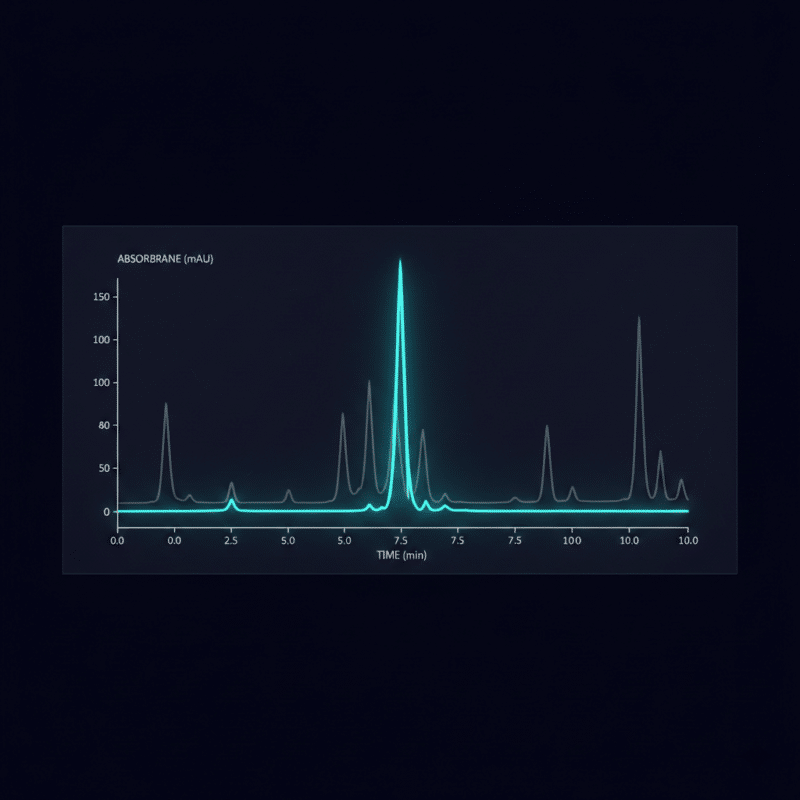
Third-party testing isn't optional for serious research. Look for suppliers who provide Certificates of Analysis from independent laboratories — not in-house testing, which is essentially grading your own homework.
At WhyNot Labs, every batch of TB-500 is tested by Vanguard Laboratory, an independent third-party laboratory. Full COAs are published publicly — not summaries, not "available upon request." You can verify purity, identity, and composition before use in research. Browse our COA Library →
Storage and Handling
| Condition |
Temperature |
Notes |
| Long-term storage | -20°C | Keep sealed and dry — lyophilized peptides are hygroscopic |
| Short-term storage | 2-8°C | Acceptable for weeks to months depending on conditions |
| After reconstitution | 2-8°C | Avoid repeated freeze-thaw cycles |
| Light sensitivity | All temps | Protect from direct light exposure during storage |
For research use only. Products are not drugs, foods, or cosmetics.
From WhyNot Labs
At WhyNot Labs, every batch is independently tested by Vanguard Laboratory. Full COAs are published on site and linked to your specific batch number. We source directly from verified manufacturers — not wholesale distributors — which is why our pricing doesn't include multiple layers of middleman markup.
Independent testing. Research-grade purity. Transparent sourcing.
WhyNot Labs sells research compounds only. Not for human consumption.
FAQ
Frequently Asked Questions About TB-500
TB-500 is a synthetic analog of Thymosin Beta-4, a 43-amino acid peptide naturally found in nearly all mammalian cells. It's used in research settings to study actin regulation, cell migration, and tissue remodeling pathways. CAS number: 77591-33-4.
What's the difference between TB-500 and Thymosin Beta-4?
They're the same molecule. "Thymosin Beta-4" or "Tβ4" is the name used in academic literature for the naturally occurring peptide. "TB-500" became the standard name in research supply contexts for the synthetic version. Same amino acid sequence, same molecular structure.
How should TB-500 be stored in a laboratory setting?
Lyophilized TB-500 should be stored at -20°C for long-term stability. Short-term storage at 2-8°C is acceptable. Protect from light and moisture. Avoid repeated freeze-thaw cycles after reconstitution.
What purity should I look for in research-grade TB-500?
Published research typically uses ≥95% purity as a minimum. For reproducible results, ≥98% is the standard most researchers work with. Always verify purity through independent third-party testing. WhyNot Labs TB-500 is ≥98% purity verified by Vanguard Laboratory.
Is TB-500 the same as BPC-157?
No. They're different compounds that work through different mechanisms. TB-500 primarily operates through actin-binding and cell motility pathways. BPC-157 works through nitric oxide and angiogenic pathways. They're often studied in parallel because their mechanisms may be complementary. Read our full BPC-157 vs TB-500 comparison →
What is TB-500's molecular weight?
TB-500 has a molecular weight of approximately 4,963 g/mol with 43 amino acids and the molecular formula C₂₁₂H₃₅₀N₅₆O₇₈S.
Where was Thymosin Beta-4 first discovered?
Thymosin Beta-4 was first isolated from the thymus gland in the 1960s by Allan Goldstein's research team. It was subsequently found to be one of the most abundant intracellular peptides in mammalian biology, present in blood platelets, wound fluid, and most nucleated cells.
Research Compound Disclaimer
All products sold by WhyNot Labs are intended for laboratory research use only. Not for human or animal consumption. These products are not drugs, foods, or cosmetics and have not been evaluated by the FDA. Products are not intended to diagnose, treat, cure, or prevent any disease. Must be 21+ to purchase.
Written by Ash, Founder of WhyNot Labs. All WhyNot Labs products are independently tested by Vanguard Laboratory with full Certificates of Analysis published for every batch. For research use only.