FOR RESEARCH PURPOSES ONLY-This compound is not FDA approved. All data presented is from clinical trials for educational reference

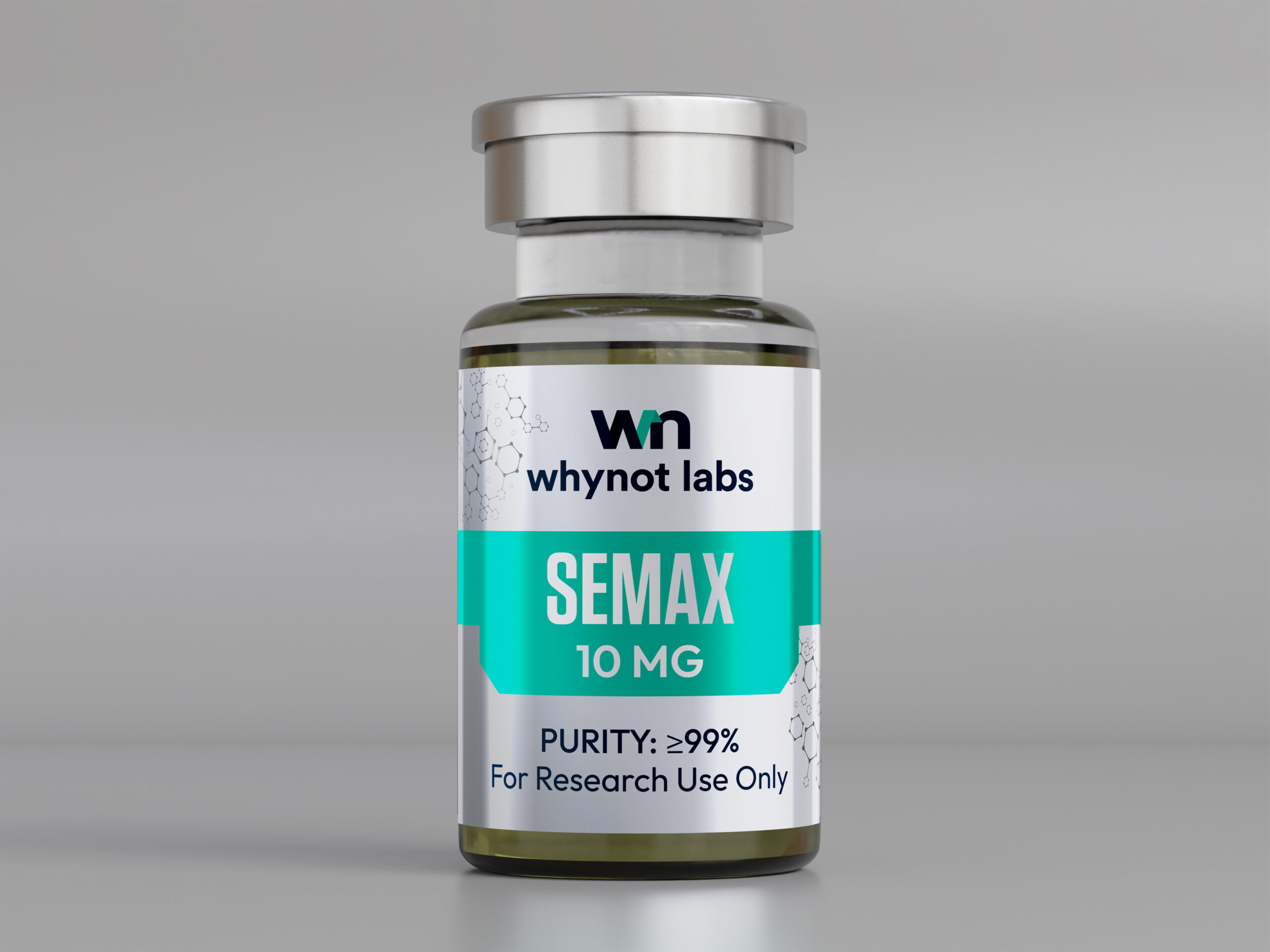
Semax 10mg

SKU: WNL-2602-E01

1 in stock

Semax is a synthetic heptapeptide (Met-Glu-His-Phe-Pro-Gly-Pro) derived from the ACTH(4-10) fragment, with a C-terminal Pro-Gly-Pro extension added for enzymatic stability. Molecular formula C37H51N9O10, molecular weight 813.86 g/mol, CAS 80714-61-0, PubChem CID 122767. The parent sequence (Met-Glu-His-Phe) maps to the core active region of adrenocorticotropic hormone; the C-terminal Pro-Gly-Pro modification confers aminopeptidase resistance documented in enzyme kinetics studies, maintaining compound integrity in cell-based assay environments. Originally developed at the Institute of Molecular Genetics of the Russian Academy of Sciences. Published in vitro research has examined Semax in the context of melanocortin receptor binding at MC4R and other subtypes, neurotrophic factor expression (BDNF and NGF in cell-based assays), and enzymatic stability characterization. Supplied as lyophilized powder, 10mg per vial, verified by Vanguard Laboratory under a 7-panel conformity protocol (ISO/IEC 17025:2017, A2LA).

For research use only. Not for human consumption.

References:
Akhapkina VI et al., Eksp Klin Farmakol, 2002 65(5):18–21
Dolotov OV et al., J Mol Neurosci, 2006 28(2):157–168
Grivennikov IA et al., Biopolymers, 2008 90(3):247–260

$69.00

1 in stock

Bulk Pricing

1 – 4 Full Price
5 – 9 10% OFF
10+ 15% OFF
Discount automatically applied at checkout
Purchase & earn 35 points!

Free delivery for orders over $150

Chemical Properties

Chemical Properties

Peptide Class Heptapeptide (7 residues) — ACTH(4-10) analog
Sequence Met-Glu-His-Phe-Pro-Gly-Pro
Molecular Formula C37H51N9O10
Molecular Weight 813.86 g/mol
Purity ≥98% (Vanguard Laboratory Verified)
Form Lyophilized Powder
Net Content 10mg per vial
Storage -20°C long-term. 2–8°C short-term. Protect from light.

Identifiers

CAS Number 80714-61-0
PubChem CID 122767
Batch ID WNL-2602-E01
Testing Partner Vanguard Laboratory (ISO/IEC 17025:2017, A2LA)

2D Structure — Semax

Semax 2D molecular structure — ACTH analog heptapeptide CAS 80714-61-0

Description

Overview

Semax is a synthetic heptapeptide derived from the ACTH(4-10) fragment, with a C-terminal Pro-Gly-Pro tripeptide added for enzymatic stability. The parent four-residue sequence (Met-Glu-His-Phe) maps to the core active region of adrenocorticotropic hormone. The C-terminal extension is what makes the compound useful for laboratory work — it resists aminopeptidase degradation, keeping the compound intact long enough to interact with its targets in in vitro assay environments. Originally developed at the Institute of Molecular Genetics of the Russian Academy of Sciences beginning in the 1980s, Semax has one of the deeper published literature bases among synthetic neuropeptide analogs from outside Western research institutions.

Published in vitro research has examined Semax in the context of melanocortin receptor binding, neurotrophic factor expression, and enzymatic stability characterization. The compound's behavior across these three research areas has been documented across peer-reviewed publications spanning several decades.

Biochemical Characteristics

The full heptapeptide sequence of Semax — Met-Glu-His-Phe-Pro-Gly-Pro — consists of the ACTH(4-7) tetrapeptide core extended by three C-terminal residues. The tetrapeptide core (Met-Glu-His-Phe) corresponds to positions 4 through 7 of the ACTH sequence and includes the His6-Phe7 motif that has been linked to melanocortin receptor interaction in published binding research.

The C-terminal Pro-Gly-Pro extension is a stabilization strategy shared with Selank, where the same tripeptide modification is appended to the tuftsin backbone. In both cases, the Pro-Gly-Pro addition sterically interferes with aminopeptidase cleavage at the C-terminus, extending compound stability in enzymatic environments. This has been confirmed through comparative degradation assays published in the peptide chemistry literature. Molecular formula C37H51N9O10, molecular weight 813.86 g/mol, CAS 80714-61-0, PubChem CID 122767.

Research Applications

  • Melanocortin receptor binding studies: characterizing activity profiles at MC4R and other receptor subtypes in cell membrane preparations
  • Neurotrophic factor expression assays: measuring BDNF and NGF mRNA and protein levels in neural cell culture systems
  • Enzyme kinetics studies: characterizing aminopeptidase resistance of the Pro-Gly-Pro C-terminal modification vs. parent ACTH(4-7) fragment
  • ACTH fragment structure-activity relationship (SAR) research comparing modified vs. unmodified sequences at melanocortin receptors
  • Comparative neuropeptide stability studies examining C-terminal modification strategies across synthetic analogs
  • Parallel neuropeptide research protocols alongside Selank, which shares the Pro-Gly-Pro stabilization architecture

All applications are restricted to non-clinical laboratory research environments.

Pathway / Mechanistic Context

Semax's mechanistic research profile centers on two main areas. The first is melanocortin receptor interaction. The ACTH(4-10) parent fragment has documented activity at melanocortin receptors in published research, with the His6 and Phe7 positions playing a role in receptor contact based on structure-activity relationship studies. Semax binding studies have characterized its activity at MC4R specifically, as well as other receptor subtypes, using radioligand competition assays and cell-based functional assays.

The second area is neurotrophic factor expression. Published research has examined BDNF and NGF expression changes in neural cell lines following Semax treatment, using mRNA profiling and protein-level quantification. This line of research is mechanistically distinct from the receptor binding work and reflects the compound's effects on intracellular signaling downstream of receptor activation in cell culture models.

The enzymatic stability mechanism is well-characterized. Aminopeptidases cleave peptides from the N-terminus; the Pro-Gly-Pro C-terminal extension doesn't directly protect the N-terminus, but the overall structural modification results in measurably longer compound half-life in enzymatic assay conditions compared to the unmodified ACTH(4-7) sequence.

Preclinical Research Summary

Semax has been studied across in vitro and animal model research settings since its development in the 1980s. Early published work focused on establishing the compound's stability advantage over the parent ACTH fragment and documenting its melanocortin receptor interaction profile. Grivennikov et al. (2008, Biopolymers) provided a comprehensive review of the structural biology and in vitro pharmacology of Semax and related ACTH-derived peptides, covering receptor interaction data and neurotrophic factor expression findings.

Dolotov et al. (2006, Journal of Molecular Neuroscience) documented BDNF expression outcomes in cell-based assay systems following Semax treatment, providing published evidence for the compound's effects on neurotrophic factor pathways in in vitro models. The published research base spans multiple decades and includes both Russian-origin publications and work from independent research groups that have replicated and extended the original findings.

Form & Analytical Testing

Semax 10mg is supplied as research-grade lyophilized powder. Each batch is submitted to Vanguard Laboratory for conformity testing using a 5-vial protocol. The 7-panel protocol covers identity verification (mass spectrometry), purity analysis (≥98% via HPLC), net content verification (10mg confirmed), endotoxin levels, heavy metals screening, sterility, and overall conformity assessment. Batch-specific COAs are published on our COA Library and linked via QR code on each vial.

Referenced Citations

  1. Akhapkina VI et al., “Effects of semax on central dopaminergic and serotoninergic systems in rats,” Eksp Klin Farmakol, 2002 65(5):18–21.
  2. Dolotov OV et al., “Semax, an analogue of ACTH(4–10) with cognitive effects, regulates BDNF and trkB expression in the rat hippocampus,” J Mol Neurosci, 2006 28(2):157–168.
  3. Grivennikov IA et al., “Behavioral effects and receptor interactions of ACTH-related peptides,” Biopolymers, 2008 90(3):247–260.
  4. Sebentsova EA et al., “Semax-induced changes in the expression of genes of neurotrophic factors,” Genetika, 2008 44(5):681–691.

ALL ARTICLES AND PRODUCT INFORMATION PROVIDED ON THIS WEBSITE ARE FOR INFORMATIONAL AND EDUCATIONAL PURPOSES ONLY.

RUO Disclaimer

The products offered on this website are furnished for in-vitro studies only. In-vitro studies (Latin: in glass) are performed outside of the body. These products are not medicines or drugs and have not been approved by the FDA to prevent, treat or cure any medical condition, ailment or disease. Bodily introduction of any kind into humans or animals is strictly forbidden by law. This product should only be handled by licensed, qualified professionals.

This product is not a drug, food, or cosmetic and may not be misbranded, misused, or mislabeled as a drug, food, or cosmetic. No statements on this website have been evaluated by the FDA. You must be 21 years or older to purchase.

COA / HPLC / MS

Batch COA: In Progress

This batch is currently undergoing conformity testing at Vanguard Laboratory. The full Certificate of Analysis — covering identity, purity (≥98% via HPLC), net content (10mg confirmed), endotoxins, heavy metals, and sterility — will be published here and linked via QR code on each vial upon completion.

We don't ship product before results are in. When the COA is live, you'll find it here and on our COA Library.

Notice

Any peptides on our website are sold for research and laboratory use. The products should not be used in form of cosmetic, food additive, chemical, drugs, or other applications not classified in this document. The listing of a material on this site does not constitute a license to its use in infringement of any patent. All customers represented and warranted that through their own review and study that they are fully aware and knowledgeable about the following: Government regulations regarding the use of and exposure to all products. The health and safety hazards associated with the handling of the products they purchase. The necessity of adequately warning of the health and safety hazards associated with any products. The company holds its right to cancel any purchase done if there is any proof or the company sees that you are buying for use other than it is sold for.
“WhyNot Labs” products are intended solely for laboratory research purposes and are not to be used for any other purposes, including but not limited to in vitro diagnostic purpose, in food drugs, medical devices, or cosmetics for humans or animals or for commercial purposes. The purchaser agrees that the products have not been sterilized or tested by “WhyNot Labs” for safety and efficacy in food, drug, medical device, cosmetic, commercial or any other use.

The purchaser expressly represents and warrants to “WhyNot Labs” that the purchaser will properly test, use, manufacture and market any products purchased from “WhyNot Labs” and/or materials produced with products purchased from “WhyNot Labs” in accordance with the practices of a reliable person who is experienced in the field and in strict compliance with all applicable laws and regulations, now and hereinafter enacted.