
FOR RESEARCH PURPOSES ONLY-This compound is not FDA approved. All data presented is from clinical trials for educational reference
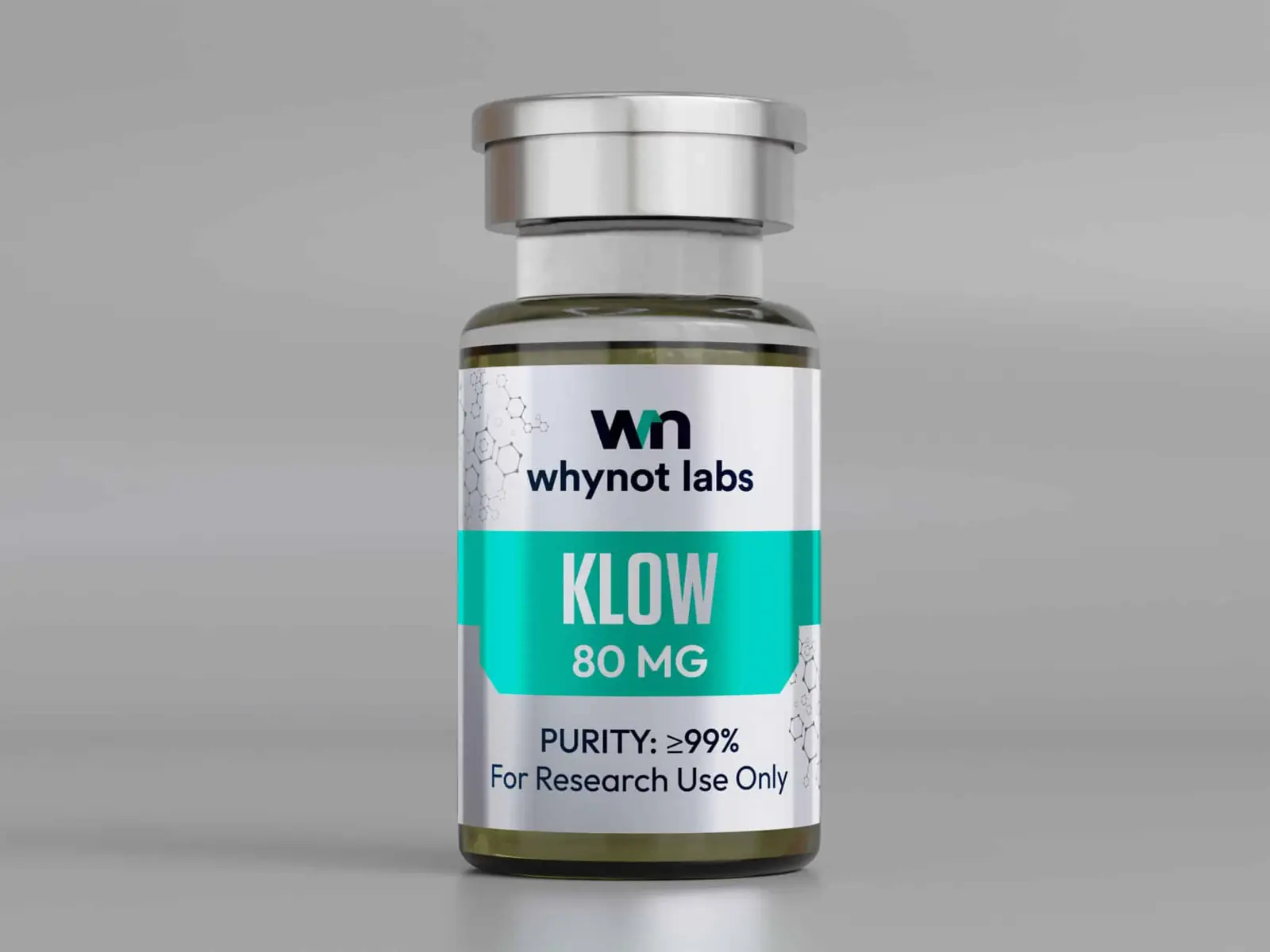
KLOW 80 mg
1 in stock
Klow-80 is a pre-blended research compound containing four distinct peptides in a single lyophilized vial: BPC-157 (10mg), TB-500 (10mg), KPV (10mg), and GHK-Cu (50mg). Each component has its own published research profile examining separate aspects of cellular signaling — angiogenic pathways (BPC-157), actin dynamics and cell migration (TB-500), melanocortin receptor interactions (KPV), and collagen synthesis and antioxidant enzyme activity (GHK-Cu). Studied in laboratory settings as a multi-pathway research tool for in vitro models requiring coordinated peptide signaling.
For research use only. Not for human consumption.
References:
Seiwerth S et al., J Physiol Pharmacol, 2018 69(2):203–212 (BPC-157)
Goldstein AL et al., Ann N Y Acad Sci, 2012 1270:1–14 (TB-500/Thymosin β4)
Pickart L & Margolina A, Sci Rep, 2018 8:1–14 (GHK-Cu)
$199.00
1 in stock
Bulk Pricing
| 1 – 4 | Full Price |
| 5 – 9 | 10% OFF |
| 10+ | 15% OFF |
Free delivery for orders over $150
Blend Composition
| Total Peptide Content | 80mg per vial |
| BPC-157 | 10mg per vial |
| TB-500 (Thymosin β4 fragment) | 10mg per vial |
| KPV (Lys-Pro-Val) | 10mg per vial |
| GHK-Cu (Copper Tripeptide-1) | 50mg per vial |
| Form | Lyophilized Powder (co-lyophilized blend) |
| Purity | ≥98% per component (Vanguard Verified) |
| Storage | -20°C. Protect from light and moisture. |
Component Identifiers
| Component | CAS Number | Molecular Weight | PubChem CID |
|---|---|---|---|
| BPC-157 | 137525-51-0 | 1419.53 g/mol | 9941957 |
| TB-500 (Thymosin β4 fragment) | 77591-33-4 | 4963.44 g/mol (full Tβ4) | 16132316 |
| KPV (Lys-Pro-Val) | 67727-97-3 | 327.42 g/mol | 122437 |
| GHK-Cu (Copper Tripeptide-1) | 49557-75-7 | 340.38 g/mol | 73587 |
- 1. Overview
- 2. Biochemical Characteristics
- 3. Research Applications
- 4. Pathway / Mechanistic Context
- 5. Preclinical Research Summary
- 6. Form & Analytical Testing
- 7. Referenced Citations
- 8. RUO Disclaimer
Overview
Klow-80 is a proprietary multi-peptide research blend developed for laboratory investigation of coordinated cellular signaling across distinct biological pathways. Each vial contains four independently characterized compounds — BPC-157 (10mg), TB-500 (10mg), KPV (10mg), and GHK-Cu (50mg) — co-lyophilized into a single 80mg preparation.
The four components were selected for their distinct receptor interactions and non-overlapping research applications. BPC-157 has been examined in angiogenic and growth factor signaling models. TB-500 (a synthetic Thymosin Beta-4 fragment) has been studied in actin dynamics and cell migration contexts. KPV has been investigated for melanocortin receptor interactions and inflammatory pathway modulation. GHK-Cu carries one of the largest published literature bases among copper-binding tripeptides, spanning collagen synthesis, wound healing biology, and antioxidant enzyme research. Together, they form a multi-pathway tool suited for in vitro research requiring simultaneous investigation of these signaling contexts.
Biochemical Characteristics
| Component | Structure | Molecular Weight | CAS No. |
|---|---|---|---|
| BPC-157 | 15-amino acid pentadecapeptide (GEPPPGKPADDAGLV) | 1419.53 g/mol | 137525-51-0 |
| TB-500 | Synthetic Thymosin β4 fragment (LKKTETQ) | ~4963 g/mol (full Tβ4) | 77591-33-4 |
| KPV | C-terminal tripeptide of α-MSH (Lys-Pro-Val) | 327.42 g/mol | 67727-97-3 |
| GHK-Cu | Copper-binding tripeptide (Gly-His-Lys + Cu²⁺) | 340.38 g/mol | 49557-75-7 |
All four components are supplied as research-grade lyophilized compounds co-processed into a single vial. Each component maintains its individual identity and is independently verifiable by chromatographic analysis.
Research Applications
BPC-157
- Angiogenic signaling and VEGF pathway studies in cell-based assays
- Growth hormone receptor signaling and nitric oxide synthesis pathway research
- Endothelial growth factor interactions in in vitro models
TB-500 (Thymosin β4 Fragment)
- Actin sequestration and G-actin binding studies
- Cell migration and cytoskeletal organization research
- Actin-linked signaling pathway investigation in experimental models
KPV (Lys-Pro-Val)
- Melanocortin receptor binding studies (MC1R and MC3R)
- NF-κB signaling modulation in inflammatory pathway models
- α-MSH fragment activity comparisons in receptor assays
GHK-Cu (Copper Tripeptide-1)
- Collagen and elastin synthesis studies in cell culture models
- Matrix metalloproteinase modulation research
- Antioxidant enzyme activity and oxidative stress pathway investigation
- Wound healing biology in controlled laboratory settings
All applications are restricted to non-clinical laboratory research environments.
Pathway / Mechanistic Context
The four components in Klow-80 operate through distinct, non-redundant receptor and signaling mechanisms, making the blend a useful tool for multi-pathway research models:
BPC-157 influences angiogenic signaling through interactions with VEGF and growth factor receptors. Published research has examined its effects on endothelial cell behavior and nitric oxide synthase activity in cell culture.
TB-500 functions primarily as an actin-sequestering peptide. The Thymosin β4 protein and its synthetic fragments bind G-actin, reducing the pool available for filament formation. Downstream effects on cell motility, cytoskeletal remodeling, and migration have been documented in multiple experimental model systems.
KPV engages melanocortin receptors as the bioactive C-terminal tripeptide of α-melanocyte-stimulating hormone. In vitro studies have documented its role in modulating NF-κB activation — a central transcription factor in inflammatory signaling cascades.
GHK-Cu activates copper-dependent enzyme systems and gene expression programs associated with collagen biosynthesis, extracellular matrix remodeling, and oxidative stress response. The copper coordination chemistry of the GHK ligand is central to its documented biological activity across a broad published literature.
Preclinical Research Summary
BPC-157: Preclinical work has examined BPC-157 across in vitro and in vivo rodent models, with published data on endothelial signaling, vasculogenesis-related pathways, and growth factor receptor modulation. Multiple independent research groups have characterized its activity across cell-based assays and tissue models.
TB-500: Thymosin β4 and its synthetic fragments have been studied in animal models examining tissue repair mechanisms, cell migration, and inflammatory resolution. TB-500 specifically has been examined in laboratory settings for its actin-binding kinetics and downstream cytoskeletal effects.
KPV: Preclinical research on KPV has focused on its melanocortin receptor binding profile and in vitro anti-inflammatory activity. Published models have examined NF-κB pathway suppression and cytokine modulation in cell-based inflammatory assay systems.
GHK-Cu: GHK-Cu carries one of the most extensive preclinical records among copper-binding peptides. First characterized by Loren Pickart in the 1970s in human plasma, it has since been investigated in hundreds of published studies examining collagen synthesis, skin fibroblast biology, antioxidant gene expression, and matrix metalloproteinase regulation.
Form & Analytical Testing
Klow-80 is supplied as a co-lyophilized multi-peptide research blend. Every batch undergoes conformity testing at Vanguard Laboratory using a 5-vial protocol — the same standard applied to all WhyNot Labs products. Testing is performed independently and covers identity verification, purity analysis (≥98% per component via HPLC), net content verification (80mg total across all four components), endotoxin levels, heavy metals, and sterility.
Blends present a more complex testing challenge than single-compound vials — each component must be independently identified and quantified. That's why we test more vials, not fewer. Full COA documents are published on our COA Library and linked via QR code on each vial.
Referenced Citations
BPC-157
- Seiwerth S et al., "BPC 157 and Standard Angiogenic Growth Factors," J Physiol Pharmacol, 2018 69(2):203–212.
- Sikiric P et al., "Stable gastric pentadecapeptide BPC 157: novel therapy in gastrointestinal tract," Curr Pharm Des, 2011 17(16):1612–1632.
TB-500 / Thymosin β4
- Goldstein AL et al., "Thymosin β4: a multifunctional regenerative peptide," Ann N Y Acad Sci, 2012 1270:1–14.
- Hannappel E, "β-Thymosins," Ann N Y Acad Sci, 2007 1112:21–37.
KPV
GHK-Cu
- Pickart L & Margolina A, "Regenerative and Protective Actions of the GHK-Cu Peptide in the Light of the New Gene Data," Int J Mol Sci, 2018 19(7):1987.
- Pickart L et al., "GHK Peptide as a Natural Modulator of Multiple Cellular Pathways in Skin Regeneration," Biomed Res Int, 2015.
ALL ARTICLES AND PRODUCT INFORMATION PROVIDED ON THIS WEBSITE ARE FOR INFORMATIONAL AND EDUCATIONAL PURPOSES ONLY.
RUO Disclaimer
The products offered on this website are furnished for in-vitro studies only. In-vitro studies (Latin: in glass) are performed outside of the body. These products are not medicines or drugs and have not been approved by the FDA to prevent, treat or cure any medical condition, ailment or disease. Bodily introduction of any kind into humans or animals is strictly forbidden by law. This product should only be handled by licensed, qualified professionals.
This product is not a drug, food, or cosmetic and may not be misbranded, misused, or mislabeled as a drug, food, or cosmetic. No statements on this website have been evaluated by the FDA. You must be 21 years or older to purchase.
Batch COA: In Progress
This batch is currently undergoing conformity testing at Vanguard Laboratory using a 5-vial protocol. The full Certificate of Analysis — covering identity, purity, and net content for each of the four components individually, plus endotoxins, heavy metals, and sterility — will be published here and linked via QR code on each vial upon completion.
We don't ship before results are in. When the COA is live, you'll find it here and on our COA Library.
<!-- ===== REPLACE ABOVE WITH THIS AFTER COA ARRIVES =====
Batch [WNL-BATCH-ID] — Certificate of Analysis
Tested by: Vanguard Laboratory (ISO/IEC 17025:2017 Accredited — A2LA)
Test Date: [DATE]
Protocol: Conformity (5-vial, 7-panel)
BPC-157: Identity ✓ | Purity ≥98% ✓ | Net Content 10mg ✓
TB-500: Identity ✓ | Purity ≥98% ✓ | Net Content 10mg ✓
KPV: Identity ✓ | Purity ≥98% ✓ | Net Content 10mg ✓
GHK-Cu: Identity ✓ | Purity ≥98% ✓ | Net Content 50mg ✓
Endotoxins ✓ | Heavy Metals ✓ | Sterility ✓
===== END REPLACEMENT ===== -->
Related Products
In stock
Bulk Pricing
| 1 – 4 | Full Price |
| 5 – 9 | 10% OFF |
| 10+ | 15% OFF |
In stock
In stock
Bulk Pricing
| 1 – 4 | Full Price |
| 5 – 9 | 10% OFF |
| 10+ | 15% OFF |
In stock
Bulk Pricing
| 1 – 4 | Full Price |
| 5 – 9 | 10% OFF |
| 10+ | 15% OFF |
In stock
Bulk Pricing
| 1 – 4 | Full Price |
| 5 – 9 | 10% OFF |
| 10+ | 15% OFF |
In stock
Bulk Pricing
| 1 – 4 | Full Price |
| 5 – 9 | 10% OFF |
| 10+ | 15% OFF |
In stock
Bulk Pricing
| 1 – 4 | Full Price |
| 5 – 9 | 10% OFF |
| 10+ | 15% OFF |
In stock
In stock
In stock
Bulk Pricing
| 1 – 4 | Full Price |
| 5 – 9 | 10% OFF |
| 10+ | 15% OFF |
In stock
In stock
Notice
Any peptides on our website are sold for research and laboratory use. The products should not be used in form of cosmetic, food additive, chemical, drugs, or other applications not classified in this document. The listing of a material on this site does not constitute a license to its use in infringement of any patent. All customers represented and warranted that through their own review and study that they are fully aware and knowledgeable about the following: Government regulations regarding the use of and exposure to all products. The health and safety hazards associated with the handling of the products they purchase. The necessity of adequately warning of the health and safety hazards associated with any products. The company holds its right to cancel any purchase done if there is any proof or the company sees that you are buying for use other than it is sold for.
“WhyNot Labs” products are intended solely for laboratory research purposes and are not to be used for any other purposes, including but not limited to in vitro diagnostic purpose, in food drugs, medical devices, or cosmetics for humans or animals or for commercial purposes. The purchaser agrees that the products have not been sterilized or tested by “WhyNot Labs” for safety and efficacy in food, drug, medical device, cosmetic, commercial or any other use.
The purchaser expressly represents and warrants to “WhyNot Labs” that the purchaser will properly test, use, manufacture and market any products purchased from “WhyNot Labs” and/or materials produced with products purchased from “WhyNot Labs” in accordance with the practices of a reliable person who is experienced in the field and in strict compliance with all applicable laws and regulations, now and hereinafter enacted.
