Research Hub
Retatrutide Phase 3 Results (2026): Everything Researchers Need to Know About the TRIUMPH Trials
Retatrutide Phase 3 TRIUMPH-4 results show up to 28.7% body weight reduction at 68 weeks. Full trial data, timeline, and what researchers need to know in 2026.
For Research Use Only
Last Updated: February 2026
Retatrutide (LY3437943) is an investigational once-weekly triple hormone receptor agonist developed by Eli Lilly that targets the GIP, GLP-1, and glucagon receptors simultaneously. The first Phase 3 results from the TRIUMPH-4 trial, released in December 2025, reported up to 28.7% body weight reduction and significant pain score improvements in a 68-week study of 445 participants. Seven more Phase 3 readouts are expected throughout 2026.
Overview
At a Glance: Retatrutide Clinical Development Status
| Detail |
Data |
| Compound |
Retatrutide (LY3437943) |
| Developer |
Eli Lilly and Company |
| Classification |
Triple GIP/GLP-1/Glucagon Receptor Agonist |
| CAS Number |
2381089-83-2 |
| Molecular Formula |
C₂₂₁H₃₄₂N₄₆O₆₈ |
| Amino Acids |
39-residue synthetic peptide (GIP backbone) |
| Administration |
Once-weekly subcutaneous (in clinical trials) |
| FDA Status |
NOT approved. Investigational only. |
| Phase 3 Program |
TRIUMPH (8 total trials, 5,800+ participants) |
| First Phase 3 Results |
TRIUMPH-4 (December 2025) |
| Remaining Readouts |
7 trials expected throughout 2026 |
| Projected NDA Filing |
Late 2026 (estimated, not confirmed by Lilly) |
All data reflects published clinical trial results and Eli Lilly press releases. Retatrutide is not FDA approved and is available for research purposes only.
Mechanism of Action
What Makes This Compound Different? The Triple Agonist Mechanism
Here's the thing. Most compounds in this research space target one receptor. Some target two. Retatrutide goes after three.
It's a 39-amino-acid synthetic peptide built on a GIP backbone with three non-coded amino acid residues at positions 2, 13, and 20. The position 2 modification (Aib, or aminoisobutyric acid) blocks DPP-4 cleavage, which means the molecule sticks around longer. A C20 fatty diacid conjugation enables albumin binding, giving it a half-life of roughly 6 days. That's what makes once-weekly administration possible in clinical settings.
In published in vitro assays, retatrutide binds human glucagon receptor (GCGR), GIP receptor (GIPR), and GLP-1 receptor (GLP-1R) with EC₅₀ values of 5.79 nM, 0.0643 nM, and 0.775 nM, respectively.
So why does the triple mechanism matter to researchers?
The GLP-1 receptor activation pathway is well-documented in published literature. GIP receptor agonism adds a second metabolic pathway. But the glucagon receptor component is what separates retatrutide from dual agonists in preclinical models. Published research from Cell Metabolism (2022) by Coskun et al. described how the glucagon component appears to play a role in energy expenditure and lipid metabolism in laboratory settings.
This section discusses receptor pharmacology from published in vitro and preclinical research. For research use only.
Clinical Program
The TRIUMPH Phase 3 Program: Full Trial Breakdown
Lilly's TRIUMPH program isn't one trial. It's eight. And it's the biggest clinical development program for a triple agonist to date. The program launched in 2023 and has enrolled over 5,800 participants across multiple indications.
| Trial |
Population |
Key Endpoints |
Status |
| TRIUMPH-1 |
Obesity/overweight (no T2DM), includes OSA and OA baskets |
Body weight change (80 weeks) |
Results expected 2026 |
| TRIUMPH-2 |
Obesity/overweight with T2DM, includes OSA basket |
Body weight change, HbA1c |
Results expected 2026 |
| TRIUMPH-3 |
Obesity/overweight with cardiovascular disease |
Body weight change |
Results expected 2026 |
| TRIUMPH-4 ✓ |
Obesity/overweight with knee osteoarthritis |
Body weight + WOMAC pain score (68 weeks) |
Results released Dec 2025 |
| MASLD Trial |
Metabolic dysfunction-associated steatotic liver disease |
Liver-related endpoints |
Results expected 2026 |
| Sleep Apnea |
Obstructive sleep apnea |
Apnea-Hypopnea Index |
Results expected 2026 |
| Chronic Low Back Pain |
Chronic low back pain with obesity |
Pain + weight endpoints |
Results expected 2026 |
| CV/Renal Outcomes |
Cardiovascular and renal outcomes |
Major adverse CV events |
Results expected 2026 |
The basket trial design is worth noting. TRIUMPH-1 and TRIUMPH-2 use a "basket" structure where OSA and OA sub-studies are nested within the main weight management trial. This lets Lilly evaluate the compound across related conditions simultaneously without running entirely separate programs.
TRIUMPH-1 and TRIUMPH-2 also include a 4 mg maintenance group in addition to the 9 mg and 12 mg groups tested in TRIUMPH-4. That maintenance data will be interesting for researchers looking at long-term protocols.
Citi analysts have noted that TRIUMPH-1 could show over 30% weight reduction because of its longer 80-week duration. We'll see.
All trial data is from published sources and ClinicalTrials.gov registrations. For research use only.
Phase 3 Data
TRIUMPH-4 Results: The Numbers
Lilly released topline TRIUMPH-4 results on December 11, 2025. The full dataset hasn't been published in a peer-reviewed journal yet (that's expected at a future medical conference), but the topline numbers are public.
Study Design
TRIUMPH-4 (NCT05931367) was a Phase 3, 68-week, randomized, double-blind, placebo-controlled study. It enrolled 445 adults with obesity or overweight and knee osteoarthritis (no diabetes). Participants were randomized 1:1:1 to retatrutide 9 mg, retatrutide 12 mg, or placebo.
Baseline characteristics: mean body weight of 112.7 kg (248.5 lbs), mean BMI of 40.4 kg/m².
Coprimary endpoints: percent change in body weight and change in WOMAC pain subscale score at week 68.
Weight Outcomes (Efficacy Estimand)
| Group |
Weight Change |
Absolute Loss |
| Retatrutide 12 mg |
-28.7% |
-71.2 lbs (-32.3 kg) |
| Retatrutide 9 mg |
~26% (topline) |
~64 lbs (est.) |
| Placebo |
~2-3% |
~5-7 lbs (est.) |
The placebo-adjusted weight reduction for the 12 mg group was approximately 26.6%. Nearly half the participants on 12 mg achieved 25% or greater weight reduction. And 58.6% of participants on the highest level achieved at least 25% weight reduction.
WOMAC Pain Outcomes
| Group |
Pain Score Change |
Percent Reduction |
| Retatrutide 9 mg |
-4.5 points |
-75.8% |
| Retatrutide 12 mg |
-4.4 points |
~74% |
| Placebo |
-2.4 points |
-40.3% |
Look at those pain numbers. A 75.8% reduction versus 40.3% for placebo. And in a post-hoc analysis, 14.1% of the 9 mg group and 12.0% of the 12 mg group reported being completely free of knee pain at week 68. Only 4.2% of placebo participants hit that mark.
Physical function scores followed a similar pattern. WOMAC physical function subscale reductions exceeded 70% for both retatrutide groups.
Cardiometabolic Markers
Lilly reported clinically meaningful improvements in non-HDL cholesterol, high-sensitivity C-reactive protein, and triglycerides. Systolic blood pressure dropped by 14.0 mmHg at the 12 mg level. Those are notable secondary findings.
All data from Eli Lilly press release, December 11, 2025. Detailed results pending peer-reviewed publication. For research use only.
Safety Data
Safety Profile: What Researchers Should Know
Now for the part that doesn't make the headlines. Every compound has a safety profile, and researchers need the full picture.
GI Events
The most commonly reported adverse events were gastrointestinal, consistent with other incretin-class compounds in published literature. Nausea rates hit 43%, vomiting 21%, and diarrhea 33% across the retatrutide groups. These were generally mild to moderate and most common during the escalation period.
⚠ New Safety Signal: Dysesthesia
Here's something new. TRIUMPH-4 flagged a safety signal that didn't show up in Phase 2.
Dysesthesia (an abnormal sensation where normal touch feels unusual or uncomfortable) was reported in 8.8% of the 9 mg group and 20.9% of the 12 mg group versus just 0.7% on placebo. That 12 mg number, roughly 1 in 5 participants, got analysts' attention.
Lilly stated these events were generally mild and rarely led to treatment discontinuation. But it's a signal that wasn't present in the earlier 338-participant Phase 2 trial published in The New England Journal of Medicine in 2023. Researchers will be watching for this in the remaining TRIUMPH readouts.
Discontinuation Rates
Overall treatment discontinuation rates were similar across groups. But discontinuation due to adverse events was higher with retatrutide: 12.2% (9 mg) and 18.2% (12 mg) versus 4.0% with placebo. Lilly noted these rates were highly correlated with baseline BMI and some were due to "perceived excessive weight loss." For participants with baseline BMI of 35 or above, the adverse event discontinuation rates dropped to 8.8% and 12.1% for the 9 mg and 12 mg groups.
Safety data from Eli Lilly press release and published analyses. For research use only.
Comparative Analysis
Phase 2 to Phase 3: How the Data Compares
The Phase 2 trial (published in The New England Journal of Medicine, August 2023, Jastreboff et al.) enrolled 338 adults and tested multiple escalation regimens across 48 weeks. At the 12 mg level, the Phase 2 results showed 24.2% body weight reduction at 48 weeks.
TRIUMPH-4 ran 20 weeks longer (68 weeks total) and showed 28.7% at the 12 mg level. That's a meaningful jump, and it tracks with what researchers expected from the extended treatment duration.
But can we directly compare these numbers? Not exactly. The Phase 2 population had no specific comorbidity requirement beyond BMI criteria. TRIUMPH-4 specifically enrolled participants with knee osteoarthritis. Different populations, different baseline characteristics, different trial durations.
What's consistent: the dose-response relationship held up. Higher levels produced greater weight reduction in both trials. And the GI side effect profile looked similar.
What's new: the dysesthesia signal, which appeared only in Phase 3.
| Metric |
Phase 2 (48 weeks) |
TRIUMPH-4 (68 weeks) |
| Top-level weight reduction |
-24.2% |
-28.7% |
| Participants enrolled |
338 |
445 |
| Population |
Obesity (no T2DM) |
Obesity + knee OA |
| Published |
NEJM, June 2023 |
Topline Dec 2025 |
| Dysesthesia signal |
Not reported |
8.8-20.9% |
All data from published clinical trial results. For research use only.
2026 Outlook
What's Coming in 2026
2026 is going to be a big year for retatrutide data. Seven Phase 3 readouts are expected, and each one adds a piece to the puzzle.
The ones to watch most closely:
TRIUMPH-1
Could be the headline maker. It's the core obesity trial with an 80-week duration and includes a 4 mg maintenance group. Citi analysts have projected this trial could show weight reductions exceeding 30%. If that number lands, it would be the highest reported in any published Phase 3 clinical trial for this class of compounds.
TRIUMPH-2
Covers the type 2 diabetes population. Since retatrutide was also studied in a separate Phase 2 diabetes trial (published in The Lancet, 2023, Rosenstock et al.), researchers already have earlier-phase data to benchmark against.
MASLD Trial
Particularly interesting because a Phase 2a study published in Nature Medicine (2024, Sanyal et al.) showed promising liver-related findings in laboratory settings.
As for FDA filing, here's the reality: Eli Lilly has not announced an official NDA submission timeline. Industry analysts project a late 2026 filing with potential approval in late 2026 to early 2027. But those are projections, not confirmed dates. The remaining TRIUMPH data, particularly the safety profile across larger populations, will determine that timeline.
Projections are based on published analyst estimates and typical FDA timelines. Not official Eli Lilly or FDA statements. For research use only.
Research Context
Why This Matters for the Research Community
Retatrutide represents a new class of research compound. Triple agonism at GIP, GLP-1, and glucagon receptors is a mechanism that wasn't available for laboratory study until recently. The published data from both Phase 2 and Phase 3 trials gives researchers a growing body of literature to build on.
For labs working with receptor agonists, the EC₅₀ values (GCGR: 5.79 nM, GIPR: 0.0643 nM, GLP-1R: 0.775 nM) provide clear benchmarks for in vitro comparison studies. The compound's 39-amino-acid structure with three non-coded residues at positions 2, 13, and 20 makes it a useful reference for peptide engineering research.
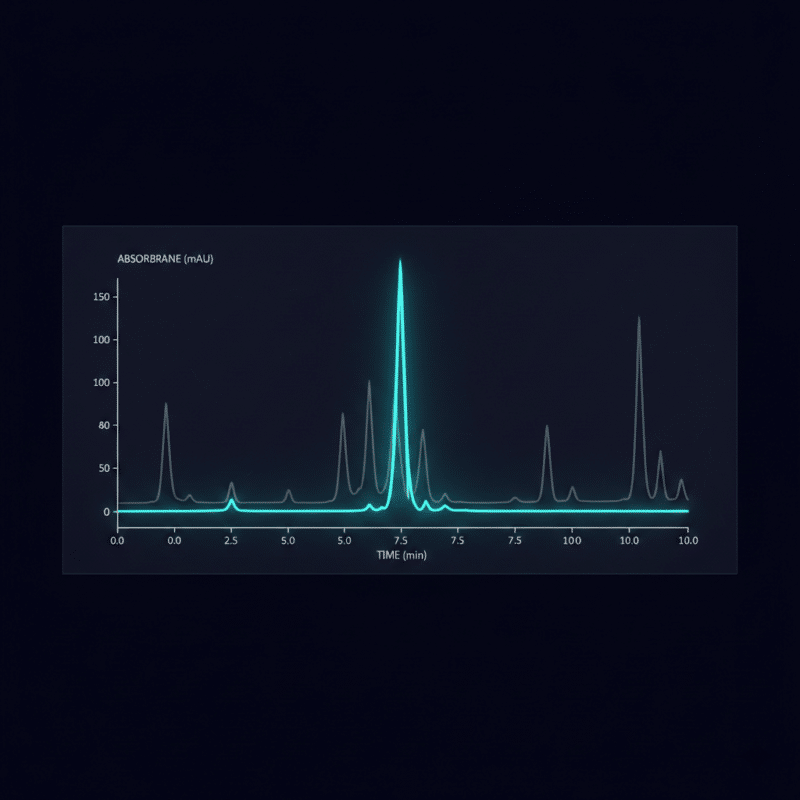
And for researchers sourcing this compound for laboratory work, purity and verification matter more than ever with a compound this active. Third-party testing through accredited labs ensures you're working with what you think you're working with.
From WhyNot Labs
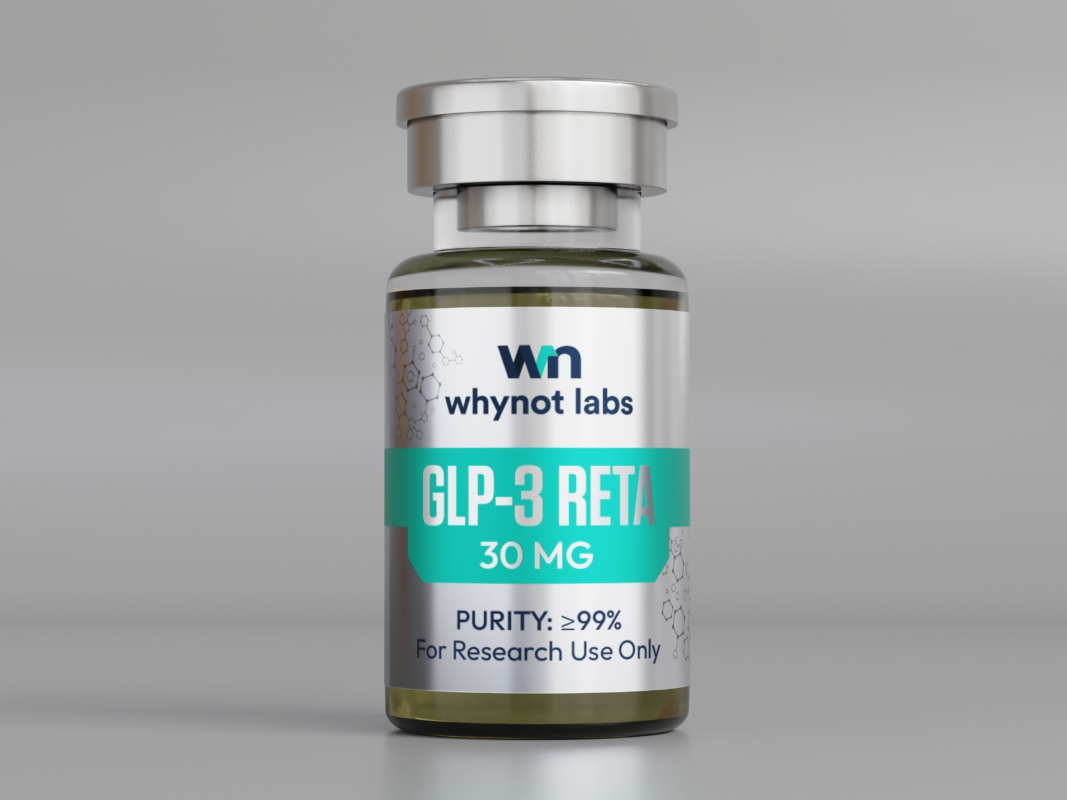
At WhyNot Labs, every batch of GLP-3 Reta ships with a Certificate of Analysis from Vanguard Laboratory. We source directly and test independently because that's the only way to do this right.
View our COA Library →
WhyNot Labs sells research compounds only. Not for human consumption. View our GLP-3 Reta product page →
Development History
Timeline: Retatrutide Clinical Development
| Date |
Milestone |
| 2022 |
Phase 1b results published in Cell Metabolism (Coskun et al.) |
| June 2023 |
Phase 2 obesity results presented at ADA and published in NEJM (Jastreboff et al.) |
| August 2023 |
Phase 2 T2DM results published in The Lancet (Rosenstock et al.) |
| 2023 |
TRIUMPH Phase 3 program initiated, 5,800+ participants enrolled |
| 2024 |
Phase 2a MASLD results published in Nature Medicine (Sanyal et al.) |
| October 2025 |
TRIUMPH program design published in Diabetes, Obesity and Metabolism (Giblin et al.) |
| Dec 11, 2025 |
TRIUMPH-4 topline results announced |
| 2026 |
Seven additional TRIUMPH readouts expected |
| Late 2026 (est.) |
Potential NDA submission (analyst projection, not confirmed) |
| Late 2026-2027 (est.) |
Potential FDA approval (analyst projection, not confirmed) |
FAQ
Frequently Asked Questions
Is retatrutide FDA approved?
No. Retatrutide is an investigational compound. It has not been approved by the FDA for any use. It's currently in Phase 3 clinical trials under Eli Lilly's TRIUMPH program. Industry analysts project a potential NDA filing in late 2026, but this hasn't been confirmed by Eli Lilly or the FDA.
What were the key findings from the TRIUMPH-4 Phase 3 trial?
The TRIUMPH-4 trial reported topline results in December 2025 showing up to 28.7% body weight reduction and 75.8% pain score improvement at 68 weeks. Both the 9 mg and 12 mg groups met all primary and key secondary endpoints. A new safety signal, dysesthesia, was reported in up to 20.9% of participants.
How does retatrutide differ from dual agonist compounds?
Retatrutide is a triple agonist targeting GIP, GLP-1, and glucagon receptors, while dual agonists (like tirzepatide) target only GIP and GLP-1 receptors. The addition of glucagon receptor agonism is a distinct pharmacological mechanism that has been described in published preclinical research as playing a role in energy expenditure and lipid metabolism in laboratory settings.
When will the remaining TRIUMPH Phase 3 results be available?
Eli Lilly has stated that seven additional Phase 3 readouts are expected throughout 2026. These cover obesity (TRIUMPH-1), type 2 diabetes (TRIUMPH-2), cardiovascular disease (TRIUMPH-3), obstructive sleep apnea, chronic low back pain, MASLD, and cardiovascular/renal outcomes.
What is the CAS number for retatrutide?
The CAS registry number for retatrutide is 2381089-83-2. Its molecular formula is C₂₂₁H₃₄₂N₄₆O₆₈. It's a 39-amino-acid synthetic peptide built on a GIP backbone with non-coded amino acid residues at positions 2, 13, and 20.
What is the TRIUMPH clinical trial program?
TRIUMPH is Eli Lilly's Phase 3 clinical development program for retatrutide. It consists of eight trials (four core registrational trials plus additional indication-specific studies) that have enrolled over 5,800 participants across obesity, type 2 diabetes, knee osteoarthritis, obstructive sleep apnea, MASLD, chronic low back pain, and cardiovascular/renal outcomes.
For research use only. Not for human consumption. WhyNot Labs does not make health claims about any compound. All information in this article is sourced from published peer-reviewed research and publicly available clinical trial data.
Written by Ash, Founder of WhyNot Labs. All WhyNot Labs products are independently tested by Vanguard Laboratory with full Certificates of Analysis published for every batch.