Research Hub
What Is Retatrutide? The Triple Agonist Peptide Researchers Can't Stop Talking About
Retatrutide is a 39-amino acid triple agonist targeting GIP, GLP-1, and glucagon receptors. Learn about its structure, published research, and what makes it unique.
For Research Use Only
Last Updated: March 2026
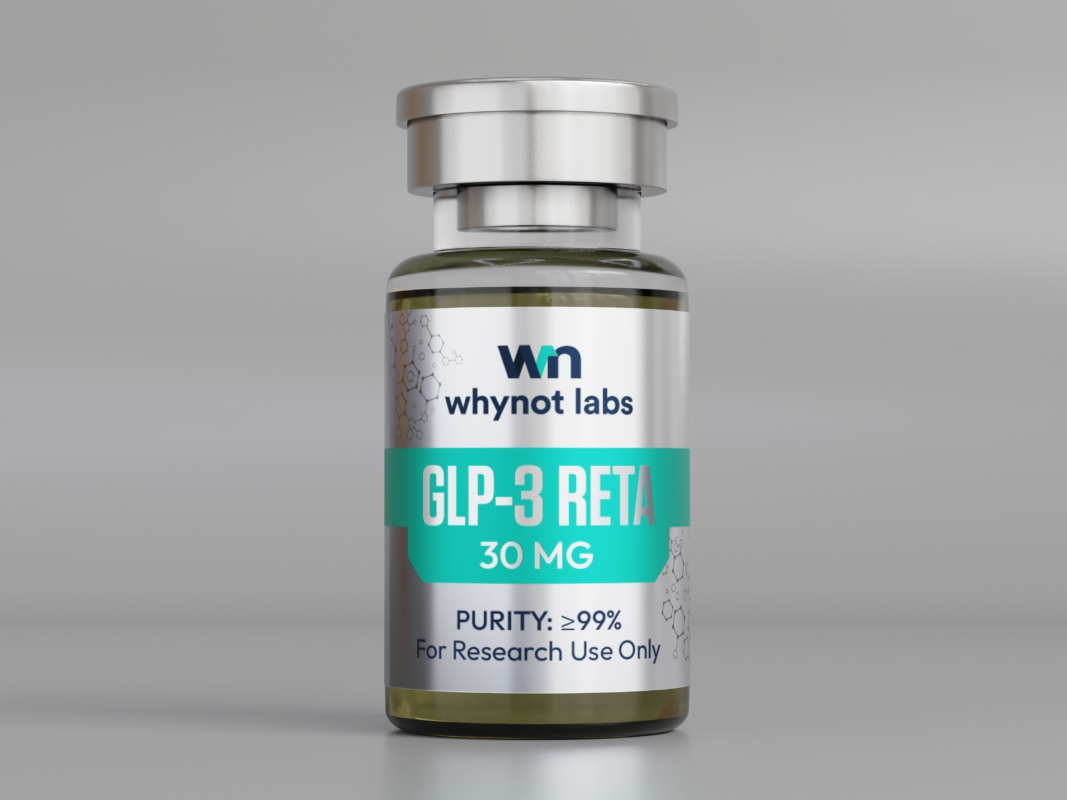
Retatrutide (LY3437943) is a 39-amino acid investigational peptide developed by Eli Lilly that acts as a triple agonist, simultaneously activating GIP, GLP-1, and glucagon receptors. It's the first compound of its kind to target all three metabolic pathways in a single molecule. It hasn't been approved by the FDA and remains under active clinical investigation across multiple Phase 3 trials.
⚗️ FOR RESEARCH USE ONLY. All information on this page is for educational and research purposes. This compound is not approved for human use. Nothing in this article constitutes medical advice, administration guidance, or therapeutic recommendation.
Overview
Retatrutide at a Glance
| Property |
Detail |
| Compound Name |
Retatrutide (LY3437943) |
| CAS Number |
2381089-83-2 |
| Developer |
Eli Lilly and Company |
| Molecular Formula |
C₂₂₁H₃₄₂N₄₆O₆₈ |
| Molecular Weight |
~4,731 g/mol |
| Amino Acids |
39 (derived from GIP backbone) |
| Form |
Lyophilized (freeze-dried) powder |
| Purity |
≥98% |
| Mechanism |
Triple agonist: GIP + GLP-1 + Glucagon receptors |
| Storage |
-20°C long-term, 2-8°C short-term. Protect from light. |
| FDA Status |
Not approved. Investigational compound. |
Compound Profile
What Is Retatrutide?
Retatrutide is a synthetic peptide. Thirty-nine amino acids built on a GIP (glucose-dependent insulinotropic polypeptide) backbone, engineered to bind three distinct metabolic receptors at once. That's where the "triple agonist" label comes from, and it's what separates this compound from everything else researchers have been working with.
Here's the thing. Most peptides in this class target one receptor. Some target two. Retatrutide goes after three. GIP, GLP-1, and glucagon. All at the same time. In the world of receptor pharmacology, that's a genuinely unusual approach to studying metabolic pathway interactions.
Eli Lilly developed the compound (internal designation LY3437943) and it's been the subject of published research since the early 2020s. The molecule itself is relatively large at approximately 4,731 g/mol, and it's supplied as a lyophilized powder for stability during storage and transport.
Why does the triple mechanism matter to researchers? Because studying how three receptor pathways interact simultaneously opens up questions that single or dual agonist compounds simply can't answer. It's new territory.
All compounds discussed are for laboratory research purposes only. Not for human consumption.
Mechanism of Action
How Retatrutide Works at the Molecular Level
Let's break this down receptor by receptor. Not because it's simple (it's not), but because understanding the individual pathways helps explain why triple activation is such an active area of preclinical investigation.
GIP Receptor Activation
GIP (glucose-dependent insulinotropic polypeptide) is the backbone of retatrutide's structure. In laboratory models, GIP receptor activation has been observed to influence insulin secretion pathways and adipose tissue signaling. The GIP receptor component gives retatrutide its structural foundation. Think of it as the chassis.
GLP-1 Receptor Activation
GLP-1 (glucagon-like peptide-1) receptor agonism is one of the most studied mechanisms in preclinical metabolic research. In published literature, GLP-1 pathway activation has been associated with effects on gastric motility and appetite signaling in animal models.
And here's where it gets interesting for researchers. Retatrutide doesn't just activate GLP-1 on its own. It does it alongside GIP and glucagon receptor activation, creating a multi-pathway interaction that can't be studied with single-target compounds.
Glucagon Receptor Activation
This is the wild card. Most compounds in this research space avoid glucagon receptor activation entirely. Retatrutide includes it on purpose.
In preclinical models, glucagon receptor signaling has been studied for its role in hepatic energy expenditure and lipid metabolism pathways. By including glucagon agonism, retatrutide lets researchers examine what happens when catabolic and anabolic metabolic signals fire simultaneously. That's a question you can't answer with a dual agonist.
The Triple Interaction
So what happens when all three receptors are activated at once? That's exactly what researchers are trying to figure out. Published laboratory data suggests the simultaneous activation creates pathway interactions that differ from the sum of individual receptor effects. In other words, three doesn't just mean "more." It means different.
Preclinical models have shown dose-dependent effects on food intake reduction and delayed gastric emptying in mouse studies. But the real research interest is in understanding the signaling cascades that occur when these three pathways overlap.
This section describes receptor mechanisms observed in preclinical and in vitro laboratory research. Not intended as therapeutic guidance.
Published Literature
Published Research on Retatrutide
The published literature on retatrutide has grown significantly since Eli Lilly began its clinical investigation program. Here's what's been reported in peer-reviewed journals and conference presentations.
Phase 2 Trial Data
A 2023 study published in The New England Journal of Medicine (Jastreboff et al.) reported results from a Phase 2 trial involving 338 participants. The study observed body weight reductions of up to 24.2% at 48 weeks at the highest investigated amount. That number caught the attention of researchers across the field because it exceeded what had been reported for dual agonist compounds in comparable study designs.
The 338-participant sample size and 48-week duration made this one of the more substantial published datasets for a triple agonist compound. The results were presented at the American Diabetes Association Scientific Sessions and generated considerable discussion in the research community.
Phase 3 TRIUMPH-4 Results
In December 2025, Eli Lilly released topline results from the TRIUMPH-4 Phase 3 trial. The data showed body weight reductions of up to 28.7%, with an average loss of up to 71.2 lbs at 68 weeks in a study population with knee osteoarthritis.
These numbers represent the highest reported body weight reduction percentages published for any single investigational compound in this class. Worth noting for researchers: this was a specific study population, not a general sample.
Active Phase 3 Program
Retatrutide currently has active Phase 3 clinical trials investigating it across multiple research areas: obesity, type 2 diabetes, MASLD (metabolic dysfunction-associated steatotic liver disease), sleep apnea, chronic low back pain, and cardiovascular and renal outcomes.
The breadth of that trial program tells you something about how the research community views the compound's potential as a multi-pathway research tool. Very few investigational peptides are being studied across that many areas simultaneously.
Triple vs. Dual vs. Single: The Comparative Research Question
One of the most actively discussed questions in published metabolic receptor research is how triple agonism compares to dual agonism (like tirzepatide, which targets GIP and GLP-1) and single agonism (like semaglutide, which targets GLP-1 alone).
Laboratory receptor binding studies have shown that each approach creates distinct activation patterns. The addition of glucagon receptor engagement appears to produce different downstream signaling cascades in preclinical models. This is still an evolving area of investigation, and researchers note that in vitro findings don't automatically predict the full picture.
All research findings discussed above are from published studies and clinical trial reports. Retatrutide has not been approved by the FDA for any use. This is not medical advice.
Lab Handling
What Researchers Should Know About Retatrutide
For laboratory work with retatrutide, quality and handling matter. Here's what the published literature and standard research protocols indicate about proper handling.
Purity Standards
Research-grade retatrutide should have a purity of ≥98%, verified by independent third-party analysis. At WhyNot Labs, every batch is tested by Vanguard Laboratory. Full Certificates of Analysis (COAs) are published for every batch, linked to the specific batch number.
Why does independent testing matter? Because the research peptide market has a transparency problem. Some suppliers test "representative samples" once a quarter. Others don't test at all. Reliable research results require verified compounds — that's pretty basic, but it's worth saying.
Storage and Handling
Retatrutide is supplied as a lyophilized (freeze-dried) powder, which is the standard form for peptide stability during storage and shipping.
| Condition |
Temperature |
Notes |
| Long-term storage |
-20°C |
Protect from light and moisture |
| Short-term storage |
2-8°C |
Protect from light and moisture |
| After reconstitution |
2-8°C |
Avoid repeated freeze-thaw cycles |
Improper storage can degrade the compound and compromise purity, which affects the reliability of research data. Repeated freeze-thaw cycles after reconstitution should be avoided as they accelerate degradation.
Verifying What You've Got
The reality of the research compound market: not every supplier sells what they say they're selling. Independent COAs aren't optional for reliable research outcomes. When evaluating any supplier, look for identity verification, purity analysis, and quantity verification on every batch — not just cherry-picked ones.
Handling and storage recommendations are for laboratory research purposes only.
From WhyNot Labs
At WhyNot Labs, every batch is independently tested by Vanguard Laboratory. Full COAs are published on site, linked to your specific batch number. We source directly from verified manufacturers — not wholesale distributors — which is why our pricing doesn't include multiple layers of middleman markup.
Independent testing. Research-grade purity. Transparent sourcing.
WhyNot Labs sells research compounds only. Not for human consumption.
FAQ
Frequently Asked Questions
What is retatrutide (LY3437943)?
Retatrutide is a 39-amino acid investigational peptide developed by Eli Lilly. It's classified as a triple agonist because it simultaneously activates three metabolic receptors: GIP, GLP-1, and glucagon. It hasn't been approved by the FDA and remains under active clinical investigation. CAS number: 2381089-83-2.
How is retatrutide different from dual agonist peptides?
While dual agonist compounds like tirzepatide target two receptors (GIP and GLP-1), retatrutide adds glucagon receptor activation as a third pathway. In preclinical laboratory models, this triple activation has been shown to produce different signaling patterns compared to dual or single agonist compounds. The addition of glucagon receptor engagement is what makes retatrutide structurally and mechanistically unique in its class.
What research has been published on retatrutide?
The most significant published data comes from a 2023 Phase 2 trial in The New England Journal of Medicine (Jastreboff et al., 338 participants, up to 24.2% body weight reduction at 48 weeks) and the December 2025 TRIUMPH-4 Phase 3 topline results (up to 28.7% body weight reduction, up to 71.2 lbs average at 68 weeks). Eli Lilly currently has active Phase 3 trials across multiple research areas.
Is retatrutide FDA approved?
No. Retatrutide is an investigational compound that has not been approved by the FDA for any use. It's currently in active Phase 3 clinical trials. All products sold by WhyNot Labs are for laboratory research purposes only.
How should retatrutide be stored in a laboratory setting?
Lyophilized retatrutide should be stored at -20°C for long-term laboratory storage or 2-8°C for short-term. Protect from light and moisture in both cases. After reconstitution, store at 2-8°C and avoid repeated freeze-thaw cycles, which accelerate degradation.
What purity should I look for in research-grade retatrutide?
Research-grade retatrutide should have a verified purity of ≥98%. Independent third-party testing (not just manufacturer self-testing) is the standard for reliable research applications. WhyNot Labs publishes full Vanguard Laboratory COAs for every batch.
What is a triple agonist?
A triple agonist is a compound that activates three distinct receptor types simultaneously. In retatrutide's case, that means GIP receptors, GLP-1 receptors, and glucagon receptors. This multi-receptor activation allows researchers to study pathway interactions that can't be examined with single or dual agonist compounds.
Research Disclaimer
All products sold by WhyNot Labs are intended for laboratory research use only. Not for human or animal consumption. These products are not drugs, foods, or cosmetics and have not been evaluated by the FDA. Products are not intended to diagnose, treat, cure, or prevent any disease. By purchasing, you confirm you are a qualified researcher over 21 years of age. WhyNot Labs is not a compounding pharmacy or chemical compounding facility as defined under 503A of the Federal Food, Drug, and Cosmetic Act.
Written by Ash, Founder of WhyNot Labs. All WhyNot Labs products are independently tested by Vanguard Laboratory with full Certificates of Analysis published for every batch.