Research Hub
How to Store Research Peptides: Temperature, Light, and Stability Guide
Lyophilized peptide storage at -20°C, reconstituted at 2-8°C, and why light, heat, and moisture destroy stability.
For Research Use Only
Last Updated: March 2026
⚠️ FOR RESEARCH USE ONLY. All information in this article pertains to laboratory storage and handling of research compounds. Not for human or animal consumption. Products are not intended to diagnose, treat, cure, or prevent any disease.
Research peptides should be stored at -20°C for long-term preservation and 2-8°C for short-term laboratory use. Lyophilized (freeze-dried) peptides are significantly more stable than reconstituted solutions. Protect all peptides from light, moisture, and repeated freeze-thaw cycles to maintain purity and structural integrity.
Quick Reference
Peptide Storage at a Glance
| Form |
Recommended Temp |
Shelf Life Estimate |
Key Precautions |
| Lyophilized (sealed) | -20°C to -80°C | 2-5+ years | Keep dry, sealed, dark |
| Lyophilized (opened) | -20°C | 6-12 months | Reseal quickly, use desiccant |
| Reconstituted | 2-8°C | Up to 30 days | Minimize freeze-thaw cycles |
| Reconstituted (frozen) | -20°C | 1-3 months | Aliquot before freezing |
Stability Fundamentals
The Three Enemies of Peptide Stability
You just spent good money on research-grade peptides. Tested by a third-party lab. Purity verified. Certificate of Analysis in hand. And then you leave the vial sitting on your lab bench next to a window for a week.
Peptides have three enemies: heat, light, and moisture. Understand those three things and you'll keep your compounds stable for years. Ignore them and you'll watch your purity numbers tank in weeks.
Peptides are short chains of amino acids held together by bonds that are sensitive to their environment. In published laboratory research, peptides stored improperly show degradation through three primary pathways: oxidation, deamidation, and hydrolysis. Each is accelerated by one (or more) of those three enemies.
🌡 Heat
Speeds up every chemical reaction, including the ones you don't want. A 2024 study published in the International Journal of Peptide Research and Therapeutics found that lyophilized peptides remained stable for months at room temperature, but degradation products appeared significantly faster at elevated temperatures (45°C). The relationship isn't linear — small increases in temperature can cause disproportionately large drops in stability.
🔆 Light
Sneaky and underestimated. UV radiation and even ambient light trigger photodegradation, particularly in peptides containing tryptophan, tyrosine, or phenylalanine residues. You won't see it happening in real time — but your HPLC results will tell the story.
💧 Moisture
Potentially the worst of the three. Lyophilized peptides are hygroscopic — they actively pull water from the air. That absorbed moisture reactivates hydrolytic degradation pathways that lyophilization was supposed to shut down. Research on freeze-dried proteins has shown that even small increases in moisture content (0.1-5% by weight) dramatically accelerate degradation at higher temperatures.
The good news? All three enemies are easy to beat. You just have to actually do it.
All storage recommendations in this article reflect published laboratory best practices. For research use only.
Lyophilized Storage
How to Store Lyophilized (Freeze-Dried) Peptides
Lyophilized peptides are the most stable form you'll work with. The freeze-drying process removes water from the compound, creating a dry, porous solid that resists degradation far better than anything in solution. But "more stable" doesn't mean indestructible.
The standard recommendation across published literature is consistent: store lyophilized peptides at -20°C or colder, in sealed containers, away from light.
Why -20°C? Because sub-freezing temperatures dramatically slow down the two biggest degradation pathways. Amide bond hydrolysis essentially stops. Oxidation rates drop significantly. At -80°C, stability studies have documented minimal degradation over a decade.
But here's what most storage guides skip over. The container matters as much as the temperature.
Peptides should be in airtight vials. Glass is preferred over plastic for long-term storage because it's less permeable to oxygen and moisture. If you're serious about preservation, purging the headspace with nitrogen or argon gas before sealing provides an extra layer of protection against oxidation. For peptides containing methionine, cysteine, or tryptophan residues — which are particularly oxidation-prone — that inert atmosphere goes from "nice to have" to essential.
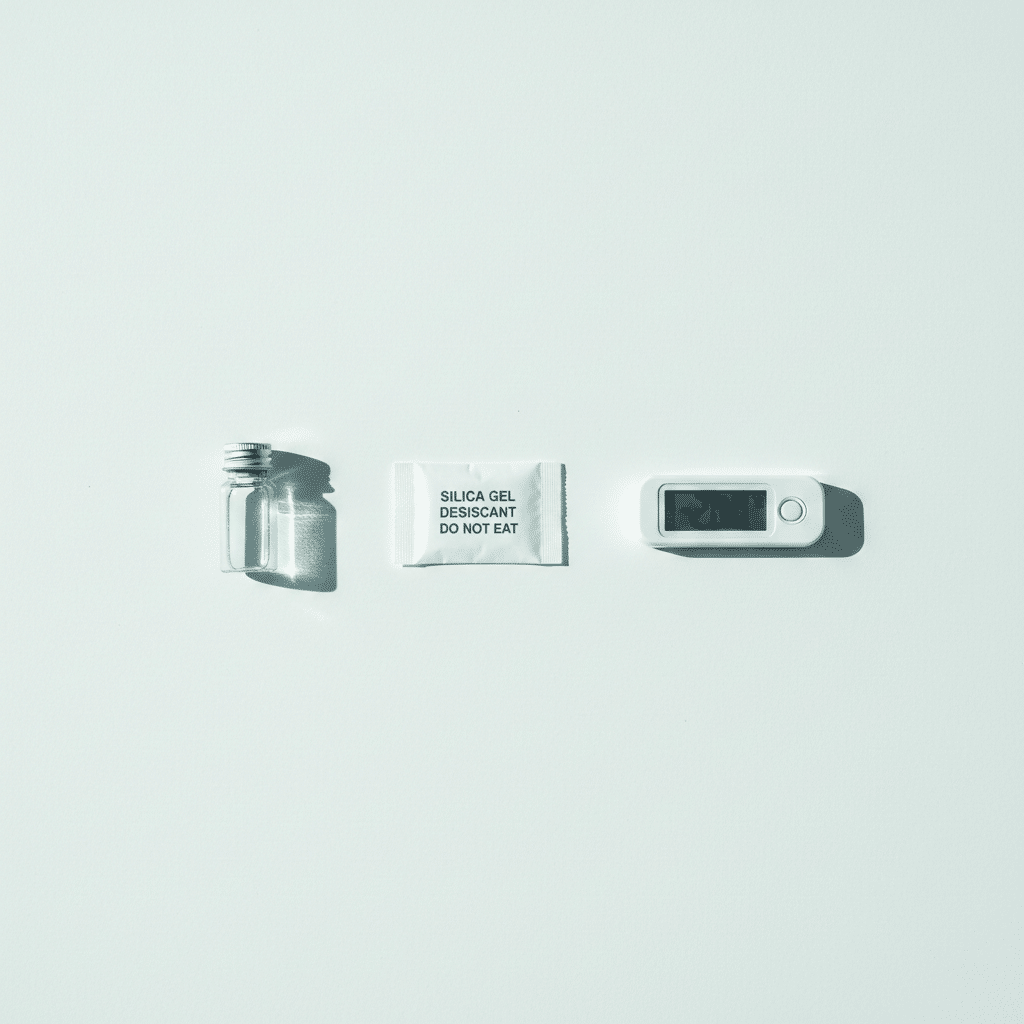
One more thing: desiccant. Keep it in or near your storage container. Lyophilized peptides will absorb moisture from the air every single time you open that vial. A silica gel packet costs almost nothing. Skipping it costs you purity.
Protocol: Lyophilized Peptide Storage
1Receive peptides, inspect packaging integrity
2Transfer to -20°C freezer immediately (or -80°C for long-term)
3Store in airtight glass vials with desiccant
4Keep away from light — amber vials or aluminum foil wrap
5Allow vial to reach room temperature before opening — prevents condensation from forming inside the vial
6Open, take what you need, reseal quickly
⚠ Easy miss: If you pull a frozen vial out of the freezer and immediately open it, warm air hits the cold surface inside and condensation forms — introducing moisture directly onto your lyophilized peptide. Let the vial equilibrate to room temperature first. Takes five to ten minutes.
Storage protocols based on published laboratory handling guidelines. For research use only.
Reconstituted Storage
How to Store Reconstituted Peptides
Once you add solvent to a lyophilized peptide, the clock starts ticking.
Reconstituted peptides are significantly less stable than their freeze-dried counterparts. You've reintroduced water, which means hydrolysis is back on the table. Bacterial contamination becomes a real risk. And every time you freeze and thaw that solution, you're potentially degrading the compound.
The general guideline: reconstituted peptides stored at 2-8°C remain stable for approximately 30 days for most sequences. Some peptides with sensitive residues will degrade faster.
So what if you won't use all of it within a month? Aliquot it. Before you even start your research, figure out how much peptide you'll need per experiment. Divide the reconstituted solution into those portions. Freeze what you don't need at -20°C. Each aliquot only gets thawed once.
Why does this matter? Because freeze-thaw cycles are brutal on peptides. Each cycle risks aggregation — peptide molecules clumping together and losing structural integrity. One or two cycles? Probably fine. Five or six? You're looking at measurable degradation in most sequences.
The solvent matters too. Bacteriostatic water (sterile water with 0.9% benzyl alcohol) inhibits microbial growth, extending the practical shelf life of reconstituted peptides compared to plain sterile water. For laboratory settings where compounds will be in solution for days or weeks, this is the standard choice.
Protocol: Reconstituted Peptide Storage
1Reconstitute with appropriate solvent under sterile conditions
2Determine aliquot sizes based on experimental needs
3Divide into single-use portions
4Store working aliquot at 2-8°C — use within 30 days
5Freeze remaining aliquots at -20°C
✖Never refreeze a thawed aliquot
Reconstitution and storage recommendations reflect published laboratory protocols. For research use only.
Compound Reference
Storage Quick Reference by Compound
Not every peptide behaves the same way in storage. Sequence composition affects stability. Here's a reference for compounds commonly found in research catalogs.
| Compound |
Form |
Short-Term |
Long-Term |
Notes |
| BPC-157 | Lyophilized | 2-8°C (weeks) | -20°C (years) | Relatively stable sequence |
| TB-500 | Lyophilized | 2-8°C (weeks) | -20°C (years) | Large molecule, keep sealed |
| WN-3 RT | Lyophilized | 2-8°C (weeks) | -20°C (years) | Protect from light |
| Tesamorelin | Lyophilized | 2-8°C (weeks) | -20°C (years) | Contains Met residue — oxidation-sensitive |
| BAC Water | Liquid | Room temp | Room temp | Away from direct light |
| Any reconstituted peptide | Solution | 2-8°C (≤30 days) | -20°C aliquots (1-3 mo) | Aliquot to avoid freeze-thaw |
Storage specifications based on manufacturer recommendations and published literature. For research use only.
Common Mistakes
Five Common Peptide Storage Mistakes
These are the mistakes that show up over and over in laboratory settings.
Mistake #1: Leaving vials at room temperature after receiving a shipment
A 2024 study found 17 out of 18 lyophilized peptides remained stable at room temperature for up to three months. But why risk it? Put them in the freezer. It takes 30 seconds.
Mistake #2: Opening a cold vial immediately
Cold vial plus warm air equals condensation equals moisture equals degradation. Let it warm to room temperature first. Five to ten minutes. Non-negotiable.
Mistake #3: Reconstituting the entire vial at once
Unless you're using all of it within 30 days, this is wasteful. Reconstitute only what you need. The rest stays lyophilized and stable.
Mistake #4: Storing vials in a frost-free freezer without protection
Frost-free freezers cycle their temperatures to prevent ice buildup. Those fluctuations can affect peptide stability over months. If you have access to a manual-defrost lab freezer, use it. If not, ensure vials are well-sealed and stored in an insulated container inside the freezer.
Mistake #5: Skipping the desiccant
One of the cheapest pieces of lab equipment you'll ever buy. Every time you open a vial of lyophilized peptide, moisture gets in. Desiccant pulls it back out. There is no good reason not to use it.
Best practices derived from published handling protocols. For research use only.
Shipping & Transit
Does Shipping Affect Peptide Quality?
Short answer: not for lyophilized peptides.
Lyophilized peptides don't require cold packs during transit. The freeze-drying process removes the water that would otherwise make them vulnerable to temperature fluctuations. Without water, the degradation pathways that require heat and moisture to accelerate are essentially inactive.
A lyophilized peptide sits in a sealed vial with no moisture. It's been tested and verified at a specific purity. It spends two to four days in transit at ambient temperature. Published stability data tells us lyophilized peptides are stable at room temperature for weeks to months. A few days in a shipping box? Not a concern.
This is why reputable suppliers don't charge extra for cold shipping on lyophilized compounds. It's not cutting corners. It's following the science.
The real question isn't transit temperature. It's what happens when the package arrives. If your shipment sits in direct sunlight for hours on a loading dock, you're introducing unnecessary light and heat exposure. Bring packages inside promptly and transfer to proper storage immediately. That's the part that actually matters.
Shipping stability information based on published lyophilization research and manufacturer guidelines. For research use only.
From WhyNot Labs
Every batch we sell is independently tested by Vanguard Laboratory before a single vial ships. Full Certificate of Analysis, linked to your specific batch number, published on our site for anyone to verify.
Independent testing. Research-grade purity. Transparent sourcing.
WhyNot Labs sells research compounds only. Not for human consumption.
FAQ
Frequently Asked Questions
How long do lyophilized peptides last in storage?
When stored properly at -20°C in sealed, desiccated containers away from light, lyophilized peptides can remain stable for 2-5 years or longer. Stability studies have documented minimal degradation in lyophilized compounds stored at -80°C for over a decade. Exact shelf life depends on the peptide's amino acid sequence, with oxidation-prone residues (methionine, cysteine, tryptophan) potentially reducing longevity.
Do research peptides need to be refrigerated?
For short-term laboratory use (weeks to a few months), refrigeration at 2-8°C is acceptable for lyophilized peptides. For long-term preservation, -20°C or colder is strongly recommended. Reconstituted peptides should always be refrigerated at 2-8°C and used within 30 days, or aliquoted and frozen at -20°C for extended storage.
Can peptides go bad at room temperature?
Lyophilized peptides are reasonably stable at room temperature for short periods (days to weeks), making brief exposure during handling and shipping a non-issue. Extended room temperature storage accelerates degradation through oxidation and deamidation pathways. Most lyophilized peptides maintain stability for weeks at room temperature, but this varies by sequence.
Why don't lyophilized peptides need cold packs for shipping?
Lyophilization removes water from the peptide compound, creating a dry solid that resists the degradation pathways activated by heat and moisture. Without water present, the chemical reactions that break down peptides proceed extremely slowly, even at ambient temperatures. A few days in transit at room temperature doesn't meaningfully affect the purity or stability of properly lyophilized compounds.
What's the best container for storing peptides?
Glass vials with airtight seals are preferred for long-term peptide storage. Glass is less permeable to oxygen and moisture than plastic. For maximum protection, purge the vial's headspace with nitrogen or argon gas before sealing, and include a desiccant packet. Amber glass vials or vials wrapped in aluminum foil provide additional protection against photodegradation.
How many times can I freeze and thaw a reconstituted peptide?
Ideally, zero. Every freeze-thaw cycle risks aggregation and structural degradation. Best practice is to divide reconstituted peptides into single-use aliquots before freezing so each portion is only thawed once. One or two cycles are unlikely to cause significant degradation for most sequences, but this should be the exception, not the routine.
What happens if my peptide was exposed to light?
Light exposure, particularly UV radiation, can trigger photodegradation in peptides containing light-sensitive amino acids like tryptophan, tyrosine, and phenylalanine. Brief incidental exposure (minutes during handling) is unlikely to cause measurable degradation. Prolonged exposure (hours to days in direct or ambient light) can reduce purity. If you suspect extended exposure, HPLC analysis can confirm whether degradation has occurred.
Research Use Disclaimer
All products sold by WhyNot Labs are intended for laboratory research use only. Not for human or animal consumption. These products are not drugs, foods, or cosmetics and have not been evaluated by the FDA. Products are not intended to diagnose, treat, cure, or prevent any disease. By purchasing, you confirm you are a qualified researcher over 21 years of age.
Written by Ash, Founder of WhyNot Labs. All WhyNot Labs products are independently tested by Vanguard Laboratory with full Certificates of Analysis published for every batch.